
Internationalisation 2026: Where to Go, Gow to Get There, and Why Do It (Without Mistakes)
By 2026, internationalisation will no longer be an opportunistic choice, but a strategic lever for growth, maintaining competitiveness and risk diversification. The international landscape is marked by recurring geopolitical shocks, greater fragmentation, the increasingly strategic use of trade, and supply chains under pressure. That is why the right question today is no longer simply ‘where can I sell?’, but ‘in which markets does it make sense to invest sustainably over the next 3–5 years?’.
Deciding where to expand internationally in 2026 requires more data, more simulations and a more practical assessment of costs, timelines, compliance, internal organisation and digital tools. Even the institutions that monitor trade and competitiveness emphasise that market knowledge and supply chain resilience are now key factors in guiding decisions on overseas growth.
Where to Go?
1. Geopolitics and Stability
Markets that are closer to Europe in terms of regulation, politics and logistics generally offer greater predictability. For many Italian SMEs, Europe remains the natural first choice for expansion: the single market continues to provide access to 450 million consumers, and the European Commission is working to reduce barriers and paperwork1.
In 2026, therefore, there remain three key regions to prioritise: Europe, North America and selected parts of Asia. Europe is often the most straightforward market for testing and consolidation; North America requires a more robust structure; Asia can offer significant opportunities, but demands greater operational, commercial and cultural adaptation.
In the ‘Selective Asia’ section, India and Vietnam are worth paying attention to2 because the reorganisation of supply chains is driving investment in manufacturing and logistics, but entering these markets requires greater operational and commercial adaptation.
Key point: avoid a superficial approach in markets subject to significant instability, regulatory volatility or trade tensions.
2. Tariffs and Industrial Policy
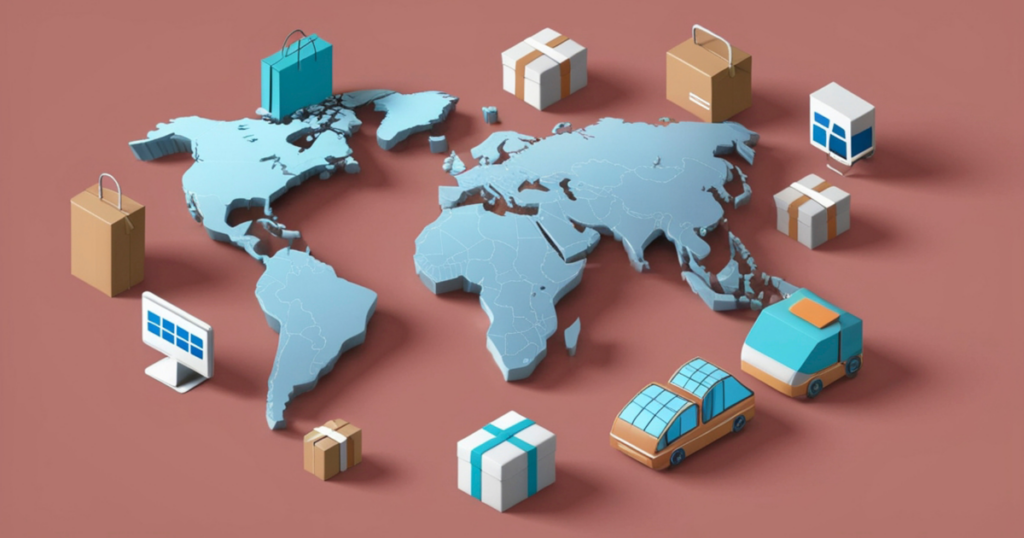
Tariffs are no longer merely a cost: they are a tool for industrial, competitive and geopolitical policy. In the United States, for example, the reintroduction of broad-based tariffs in 2025 has highlighted the need to consider local commercial presence, localisation of production and a review of sourcing strategies3. Indeed, several international companies have stated their intention to expand or localise operations in the US to mitigate the impact of tariffs4.
In Europe, however, intra-EU access remains simpler from both a regulatory and operational perspective, even though the simplification of the single market is still a work in progress.
In Asia, opportunities exist, but they must be considered alongside compliance, trade agreements, local regulations and the actual ability to maintain a presence in the market.
Key point: if tariffs significantly erode margins, competitiveness and delivery times, simply renegotiating the price is not enough. The market entry model needs to be rethought.
3. Market Breadth and Depth
It is not enough for a market to be large: it must align with your positioning, your level of investment, and your ability to generate and manage demand.
The United States remains a huge market, but one that is competitive and fragmented.
Germany continues to be a natural destination for many industrial products.
Spain may represent a quicker market to test for some Italian companies.
It is therefore better to have a medium-sized but straightforward market than a gigantic but scattered one.
The real question is not just how much demand there is, but how much demand you can serve well, consistently and with sustainable margins.
4. Cultural Distance
One of the most underestimated factors remains cultural distance: language, negotiation, decision-making times, service expectations and building trust. In the US, speed is key; in Germany, precision; in many Asian markets, the long-term relationship that precedes business carries greater weight.
Key Point: the greater the cultural distance, the more time, commercial adaptation and a local presence are required – even if only through a partner or a dedicated team.
5. Geographical and Logistics Distance
Costs, lead times, transport reliability and operational control capabilities matter more than ever. Supply chains are undergoing a selective reconfiguration along geopolitical lines, and this increases the importance of resilience, diversification and reducing uncertainty5.
In practice, geographical distance today affects not only logistics costs, but also service quality, supply continuity and responsiveness to the market.
For this reason, before choosing a country, it is essential to accurately assess logistics, stock levels, partners, customs clearance times and the ability to manage unforeseen events.
Key point: in a period of significant global upheaval, logistics costs and lead times can change rapidly. Operational risk has once again taken on strategic importance.
So, How Can Businesses Go Global in 2026?

In 2026, the most effective strategies are hybrid and progressive.
The process begins with a market test, followed by the creation of an indirect presence through a distributor or agent where appropriate, and only then is a direct commercial presence or local structure considered. In more complex markets, particularly where tariffs are a factor or competition is fierce, the ‘local-first’ model is becoming increasingly relevant.
This means focusing first on adapting the product offering, pricing, channels, contractual arrangements and the ability to generate qualified leads. Strategic partnerships are useful, but they must never result in a complete handover of the market. Above all, the foreign market must remain transparent and controllable by the company.
Digital Internationalisation, CRM and Data
Digital internationalisation does not replace a physical presence, but rather paves the way for it and reinforces it.
Digitalisation reduces the costs of accessing international trade6, speeds up business activities and, above all, helps SMEs and mid-cap companies to connect more effectively with customers and partners. This is why international SEO, country-specific campaigns, CRM, lead tracking and data analysis are not optional extras: they are integral to the business model.
The 5 Most Common Mistakes (To Be Avoided at All Costs)

1. Choose the ‘trendy’ market
Simply following the market of the moment without proper analysis often leads to poor investment decisions. A market that looks attractive on paper may not align well with profit margins, business structure, entry timing and the company’s capabilities.
2. Underestimating the Complexity
Selling abroad is not simply a matter of selling in your country with a translated price list. Regulations, contracts, tax laws, after-sales support and customer expectations vary significantly from country to country.
3. Relying Entirely on a Distributor
The distributor may speed up your market entry, but the market must remain yours: data, customers, insights and commercial control cannot be entirely delegated.
4. Not Adapting the Offer
The product, price, message and channels must be adapted to the local market. What works in your country may not work elsewhere, or may only work after careful adaptation.
5. Lack of Strategy and Consistency
Internationalisation is not a one-off project. It requires a strategy translated into an operational plan, a dedicated budget, clear KPIs, clearly defined internal roles and appropriate digital tools. It is a marathon, not a one-off endeavour.

Conclusion
Going global in 2026 means targeting fewer markets but selecting them more carefully, entering them more gradually, anticipating risks, logistics, tariffs and cultural differences, and strengthening the commercial and organisational infrastructure that underpins overseas growth.
Those who approach foreign markets with a more selective, digital and financially structured strategy start with a real advantage.
For businesses seeking to grow in foreign markets, the aim is not merely to export more, but to build a sustainable, coherent and profitable path to internationalisation over time. In this process, market analysis, entry models, digital tools and financial structure must work in tandem.
If you wish to build a solid, sustainable internationalisation strategy that is consistent with your growth objectives, contact Roncucci&Partners to define the entry strategy best suited to your business and the most promising foreign markets.
Related Articles:
- https://commission.europa.eu/news-and-media/news/bringing-down-barriers-single-market-create-opportunities-all-2025-05-21_en
- https://www.ap.org/news-highlights/spotlights/2025/vietnam-wants-to-be-the-next-asian-tiger-and-its-overhauling-its-economy-to-make-it-happen/
- https://www.businesstimes.com.sg/international/global/trump-announces-10-tariff-all-imports-higher-rates-some-countries
- https://www.investing.com/news/stock-market-news/factboxcompanies-eye-us-expansion-to-lessen-fallout-from-tariffs-3976677
- https://www.europarl.europa.eu/RegData/etudes/BRIE/2025/779227/EPRS_BRI%282025%29779227_EN.pdf
- https://www.oecd.org/en/publications/key-issues-in-digital-trade-review_b2a9c4b1-en.html