
EU-India Agreement: a Focus on the World of Industrial Machinery
The EU-India Agreement opens up the industrial machinery market. But this advantage will not last forever
On 27 January 2026, the European Union and India concluded a free trade agreement set to bring about tangible changes to access to the Indian market1. For European exporters, the key point is clear: India will eliminate or reduce tariffs on 96.6% of EU exports and, in the case of machinery, these will largely be subject to cuts in tariffs that previously stood at up to 44%2. The European Commission estimates savings of up to €4 billion a year in customs duties for European businesses.
Related Article – A New Era of Partnership: EU and India Seal Historic Trade Agreement
For European industrial machinery manufacturers, this is not just good business news. It marks a shift in the landscape. The Indian market is becoming more accessible, but also more competitive. And when a market opens up, the advantage is not measured solely by the final price: it is measured by how quickly a company can establish itself, find the right partners, set up support services and build trust.
The Paradox of Tariff Reductions: Why Waiting Is a Mistake 
Waiting for tariffs to approach zero may seem prudent. In reality, for many businesses, it risks being a strategic mistake.
The EU-India agreement provides for benefits spread over time, with immediate reductions in some sectors and others phased in over the next 5–10 years3.
This means that competitive advantage will depend not only on the tariff schedule, but on what the company does before others: commercial presence, distribution network, after-sales service, technical adaptation and local credibility.
In other words, the real issue is not waiting for the point of maximum tariff discount. The real issue is using the initial phase to make a strong entry. In India, those who arrive prepared have a better chance of choosing better partners, defining a clearer positioning and not being crushed by the competition when the market becomes crowded.
Market Figures: A Scalable Opportunity
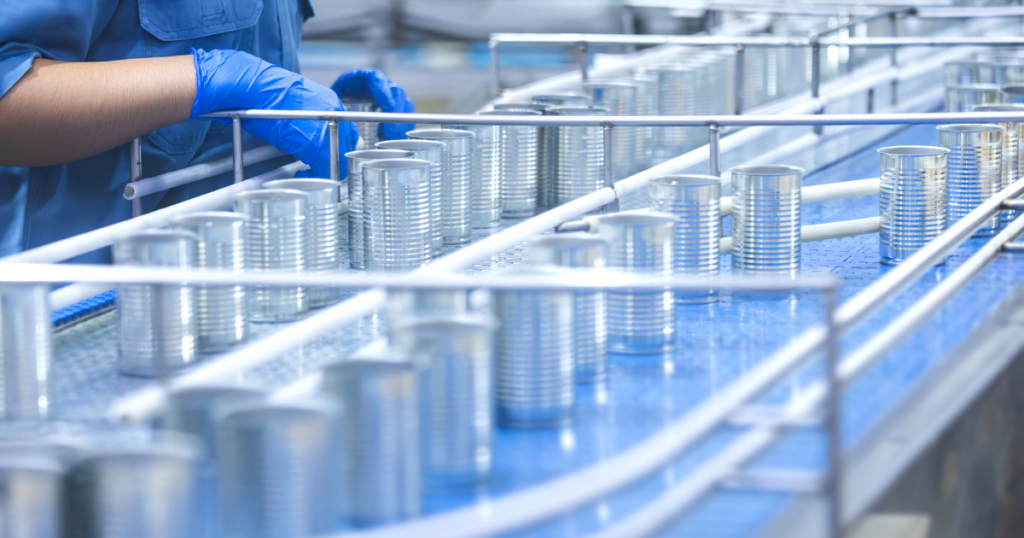
Precision Machine Tools
India continues to prioritise manufacturing and aims for the sector to account for 25% of GDP. For manufacturers of machine tools and precision technologies, this translates into growing demand for plant equipment, automation, production quality and technological upgrades.
Equipment for the Food Industry
The food processing sector also deserves attention. According to The Economic Times, the Indian food processing sector is projected to reach $535 billion by the end of the 2026 financial year4. For European manufacturers of production lines and plant equipment, particularly in high value-added segments, this opens up interesting opportunities in a market that demands efficiency, standardisation and the ability to scale up.
Technologies for Renewable Energy
In the energy sector, India has reaffirmed a highly ambitious target: 500 GW of non-fossil fuel capacity by 20305. This policy is driving investment, supply chains and demand for technologies related to manufacturing, components, automation and industrial support.
5 Strategic Priorities for Market Entry
1. Niche Specialisation Versus Generalist Approach
Those who come to India with a clear proposal tend to do better than those who make a generic pitch. A company that targets a specific vertical market, with clear use cases and recognisable expertise, is more likely to be seen as an industrial partner rather than simply a foreign supplier.
2. Local Partnerships: Strict Selection Criteria
A local partner should not be chosen in haste. They should be chosen on the basis of their industry expertise, geographical coverage, technical capabilities, reputation and financial stability. In a vast and complex market such as India, the wrong partnership will slow down market entry more than it will speed it up.
3. After-sales Service Network: a Strategic Investment
When it comes to industrial machinery, products alone are not enough. Support, spare parts, training and a rapid response are all part of the package. It is often these factors that make the difference between a one-off sale and a long-term business relationship.
4. Financing Solutions: Available Options
Many buyers consider not only the technical quality but also the financial viability of the investment. For this reason, complementing the offer with export support tools and flexible payment terms can enhance the competitiveness of the proposal.
5. Intellectual Property Protection: a Pragmatic Approach
The protection of know-how must be planned from the outset. A formal defence is not enough: what is needed is a combination of contractual safeguards, technical solutions, product modularity and careful management of the most sensitive components.
Why You Need a Customised Entry Strategy

One of the most common mistakes is to view India as a market that can be tackled using standard models. It isn’t.
An effective entry strategy must clarify at least five points: which segment to serve, with what business model, with what value proposition, with which partners, and with what realistic roadmap. Without these answers, there is a risk of entering the market reactively, making tactical decisions that are disconnected from one another, and wasting budget on activities that do not truly build the market.
This is why strategy is not a theoretical document. It is an operational tool. It helps you make better decisions, more quickly and with fewer mistakes.
The Roncucci&Partners Method for Entry Strategy
Roncucci&Partners can support your business through a structured process, tailored to the specific characteristics of your company and sector.
Stage 1: Strategic Assessment
Analysis of the actual market potential in India, assessment of product-market fit, competitive analysis and identification of the most promising market segments.
Stage 2: Strategy Development
Definition of the entry model, criteria for selecting partners, operational roadmap, commercial priorities, investment scenarios and key risks to be managed.
Stage 3: Implementation Support
Support during the most critical stages: partner screening, operational discussions, organisational matters, monitoring of initial results and course correction where necessary.
18-month Action Plan: from Assessment to Operational Implementation
In the first six months, the aim is to identify where to enter the market and the best approach to take. Between six and twelve months, the focus shifts to establishing a presence: partners, commercial adaptations, support resources, and initial qualified leads. Between twelve and eighteen months, the project enters a more practical phase: pilot installations, consolidation of the support network, commercial development, and measurement of results.
The Significance of Direct Support in India Provided by Staff Who Speaks Your Language and Can Bridge the Two Cultures
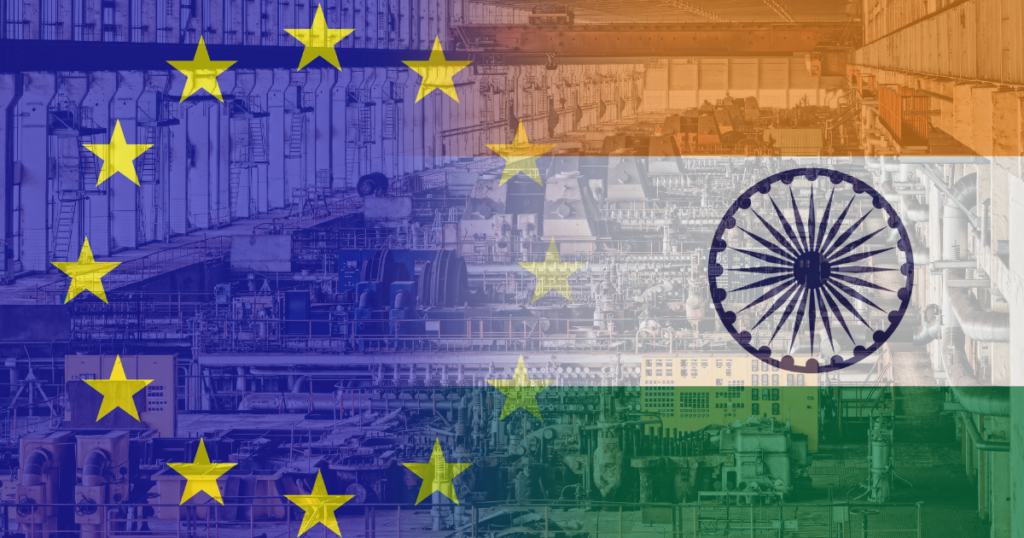
Entering the Indian market requires market expertise, operational acumen and the ability to translate business objectives into concrete actions. For many SMEs, the real challenge is not recognising that the opportunity exists, but rather turning it into a realistic, sustainable and quickly executable plan.
This is why direct support can make all the difference: it minimises initial mistakes, speeds up decision-making and helps the company establish a more solid foothold in the market.
Preliminary Analysis – Opportunities in India

Assessing the potential of the Indian market, the company’s positioning and its entry priorities in advance is the best way to ensure you don’t waste time when the market actually opens up.
Roncucci&Partners supports companies in drawing up a practical roadmap for entering the Indian market, with an approach focused on real opportunities, operational feasibility and the quality of execution.
Related Articles:
https://roncucciandpartners.com/2026/02/27/il-grande-paradosso-di-trump/
https://roncucciandpartners.com/2025/12/22/oltre-la-cina-perche-lindia-e-la-nuova-frontiera-della-diversificazione-per-le-pmi-italiane/
- https://www.euronews.com/business/2026/01/27/euindia-free-trade-deal-explained-why-it-matters-for-growth-and-jobs
- https://www.newindianexpress.com/business/2026/Jan/27/eu-india-fta-to-slash-auto-wine-and-machinery-tariffs-opening-vast-markets
- https://economictimes.indiatimes.com/news/india/eu-india-fta-2026-what-gets-cheaper-wheneu-india-fta-2026-whats-getting-cheaper-after-tariff-cut-and-when-will-indian-consumers-see-lower-prices/machinery-chemicals-boost-for-industry/slideshow/127620548.cms
- https://www.euronews.com/business/2026/01/27/euindia-free-trade-deal-explained-why-it-matters-for-growth-and-jobs
- https://www.indiatoday.in/business/story/india-on-track-to-achieve-500-gw-renewable-energy-target-by-2030-pralhad-joshi-world-economic-forum-wef-meeting-in-davos-2854495-2026-01-19