Internationalization of Italian Cosmetics: Export, Markets, and Strategies for 2027
With record exports of 8.6 billion euros in 2025, nearly half of Italian cosmetics revenue is generated outside national borders. Where is Italian cosmetics export growing today, and what approach should be taken to enter new markets?
Why internationalization is the growth driver for Italian cosmetics
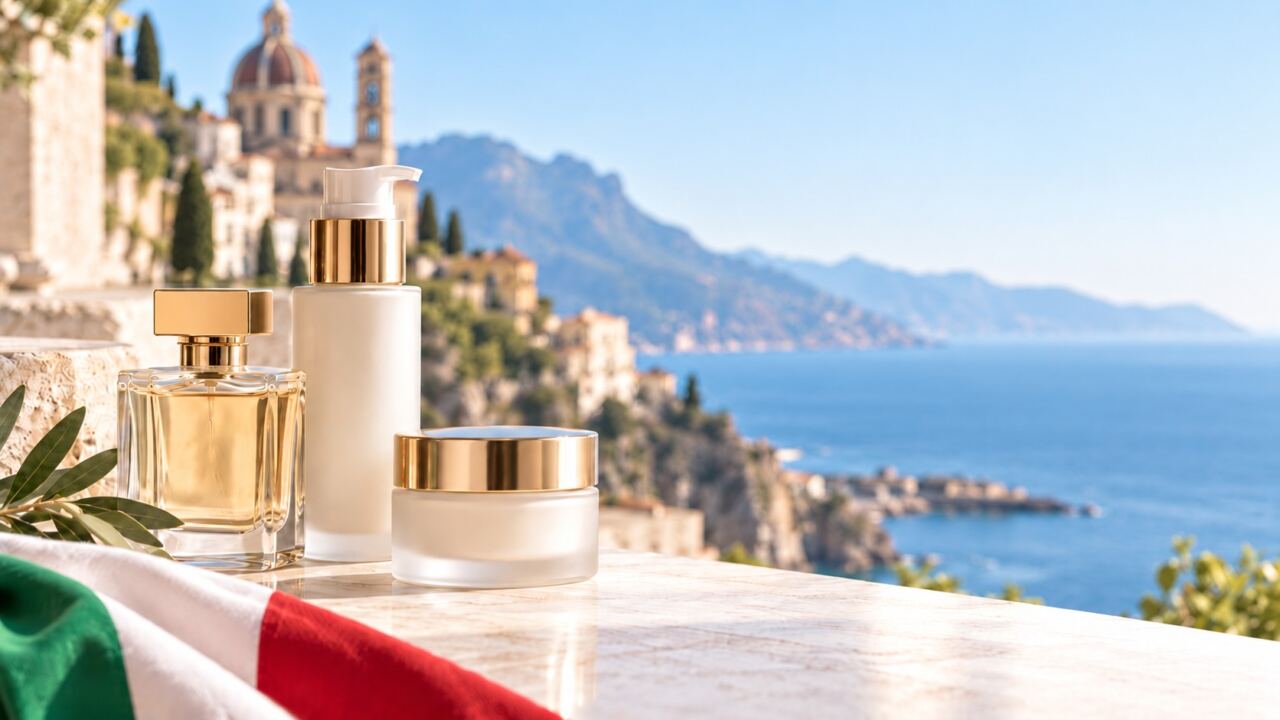
Internationalization is now one of the main engines of Italian cosmetics: in 2025, exports grew by 4.1%, outpacing the domestic market, and account for 48% of the sector’s revenue1https://www.ansa.it/ansacom/notizie/economia/cosmetica-italia/2026/07/07/cresce-lindustria-cosmetica-in-italia-fatturato-record-a-18-miliardi-di-euro_9bcf012e-31d0-4e44-ba72-3f28591edae9.html.
The Italian market remains solid, with consumer spending of 12.8 billion euros, but it is mature and increasingly sensitive to value for money. Future growth therefore also depends on the ability of Italian cosmetics companies to establish a presence in foreign markets, both established and emerging.
The context, however, has changed. U.S. tariffs, tensions in the Middle East, new European regulations, and increasingly aggressive Asian competition make export less spontaneous and more strategic, requiring method as well as product.
Italian Cosmetics Export: Sector Figures
In 2025, the Italian cosmetics industry reached a record revenue of 18 billion euros, with a positive trade balance of 5.1 billion, the highest ever. Exports reached 8.6 billion euros, equal to 48% of the sector’s revenue. (ANSA)
| Indicator (2025) | Value |
|---|---|
| Industry Revenue | 18 billion € (+2.9%) |
| Export | 8.6 billion € (+4.1%), 48% of revenue |
| Trade Balance | +5.1 billion €, positive for 15 years |
| Domestic Consumption | 12.8 billion € |
| Extended Supply Chain Value | 49 billion € |
| Employment | 105,000 direct, approximately 500,000 in the supply chain |
Over the past decade, the sector has grown at an average rate of 6.1% per year, and in 2025 it was the leading Made in Italy sector for export growth. Italy is also the fifth-largest cosmetics exporter worldwide, with a 5.6% market share.
The production hub is Lombardy, which concentrates a significant portion of the Italian cosmetics industry and in 2025 generated 63% of the sector’s national revenue2https://www.ansa.it/amp/lombardia/notizie/2026/09/16/lombardia-cuore-produttivo-della-cosmetica-vale-il-63-del-fatturato_0a7e20e7-ea65-4953-b643-b3dc93ec183e.html. Alongside the brands, there is a supply chain of contract manufacturers among the most advanced in the world, producing for many international brands, especially in makeup.
However, 2026 marks a pause: the most recent estimates indicate revenue of 18.1 billion (+1%) and export growth of 0.5%, with the momentum coming mainly from domestic consumption3https://www.ansa.it/ansacom/notizie/economia/cosmetica-italia/2026/07/07/cresce-lindustria-cosmetica-in-italia-fatturato-record-a-18-miliardi-di-euro_9bcf012e-31d0-4e44-ba72-3f28591edae9.html.
Foreign Markets for Italian Cosmetics
The United States is the leading export market for Italian cosmetics: in 2025, it absorbed approximately 1.2 billion euros in exports, ahead of France, with approximately 0.9 billion, and Germany, with 0.8 billion4https://www.ansa.it/sito/notizie/cultura/moda/2026/03/26/cosmoprof-bologna-fatturato-cosmesi-italiana-sale-a-18-miliardi-export-41_5fceaf83-a5ca-4a3d-b3fc-d1488140ec23.html.
Europe remains the foundation of exports: six of the top ten destinations are European Union countries or the United Kingdom. Outside the continent, the United Arab Emirates stand out as a gateway to the Gulf, along with the main Asian markets, where the beauty sector continues to offer development opportunities. In 2026, the geography is shifting. Estimates updated to September indicate a slowdown toward the United States and the United Arab Emirates, while Europe, Asia, and India are growing.
The United States is affected by tariff uncertainty. Following the EU-U.S. agreement of July 2025, on February 20, 2026, the Supreme Court declared the “reciprocal” tariffs introduced through emergency powers illegal. Since then, a temporary 10% tariff has been followed by new tariffs ranging from 10% to 12.5% on numerous trading partners, including the European Union, effective July 24, 20265https://theprint.in/world/trump-imposes-new-global-tariffs-drawing-protests-from-trading-partners/2995913/.
For Italian cosmetics companies, the evolution of these markets makes it even more important to assess not only the potential of demand but also the actual conditions of access and the sustainability of the internationalization project.
Global Beauty Trends Favoring Made in Italy
The global beauty market is expected to grow by approximately 5% per year through 2030, and some of the categories in which Italy is strongest are also among the most dynamic6https://www.ft.com/content/8a88235d-93ab-48ad-a748-278585b8c3cc.
- The first strength is fragrances, which represent a significant share of Italian cosmetics exports. In 2025, they were also the most vibrant category in the domestic market, with a +7.4%.
- The second strength is makeup, where Italy has a unique role thanks to contract manufacturing: according to Confindustria, approximately 55% of global makeup production is made in our country7https://www.ansa.it/canale_lifestyle/notizie/ansacom/Cosmetica_Italia2/2020/10/12/cosmesi-beltrame-in-italia-55-produzione-mondiale-make-up_7377af53-6d14-48de-a222-84053ac732f0.html, often on behalf of major international brands. Formulation know-how and production flexibility are advantages that few competitors can replicate.
- In the background, common drivers are at work across all markets. Consumers are seeking skincare with proven efficacy and dermocosmetic products, an area where Italian research is credible. Sustainability is now a market entry requirement, and the sector has already invested 300 million euros in the transition. (ANSA)
- Finally, digital: e-commerce is the fastest-growing channel in Italy, with a +9.8% in 2025, and abroad, between marketplaces and social commerce, it is often one of the quickest ways to test a new market.
Challenges of Cosmetics Export
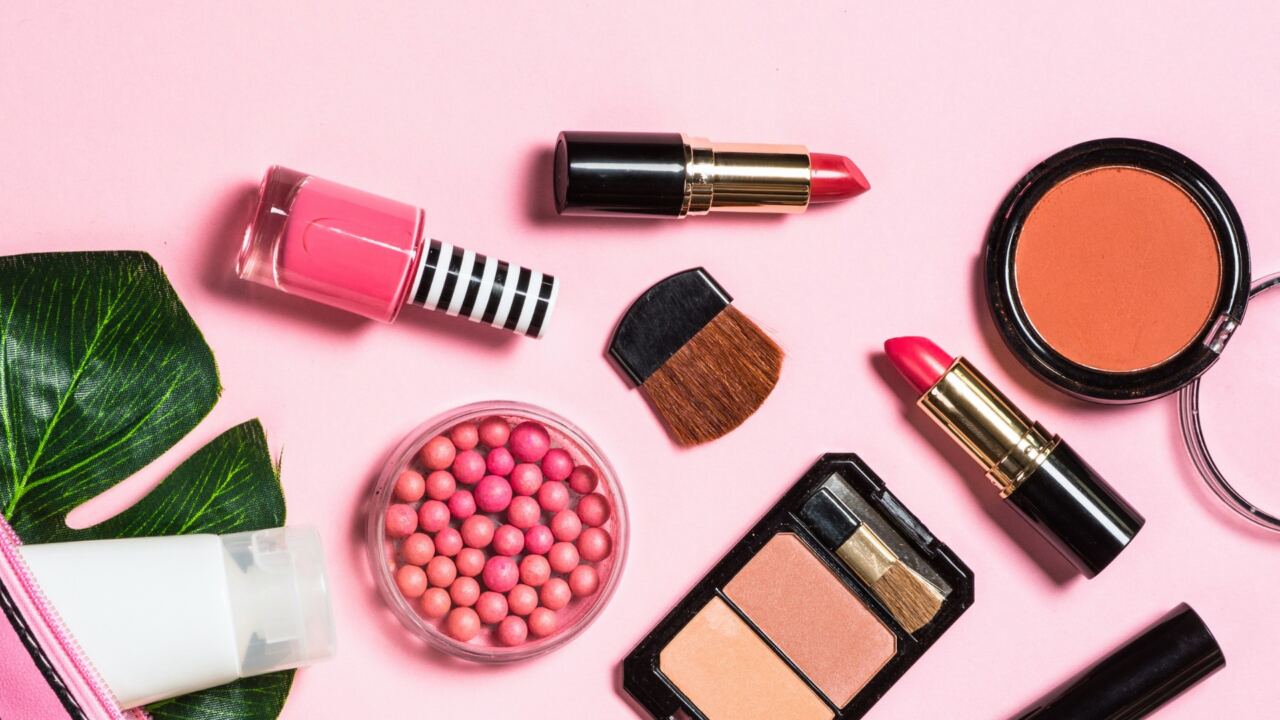
The slowdown in exports in 2026 shows that product advantage must be accompanied by strategic direction: to grow abroad, cosmetics companies must manage certain risk factors.
- The first is regulatory. Outside the European Union, each country has its own rules on product notification or registration, labeling, and permitted ingredients, from the MoCRA regulations in the United States to the systems in China, India, and Saudi Arabia: compliance timelines and costs must be budgeted before entry.
- The second is geopolitical, as demonstrated by U.S. tariffs and tensions in the Gulf, capable of changing access conditions to the most profitable markets within months.
- Then there is competition: Korean and Chinese brands are growing with aggressive pricing, rapid innovation, and a strong digital presence, and Made in Italy must leverage the quality of research and the ability to communicate it, beyond origin.
- The supply chain is also more exposed, especially due to international dependence on raw materials and ingredients. This makes supplier diversification another element to consider in the strategy.
- Finally, size: the production landscape is largely made up of SMEs, which rarely have all the necessary competencies in-house to manage multiple distant markets simultaneously.
Conclusions
Italian cosmetics starts from a position of strength: 8.6 billion in exports, a record trade balance, and a supply chain that produces for major brands worldwide.
The slowdown in 2026 raises the bar. To grow abroad, companies are moving from occasional export to an internationalization project, with markets chosen based on data, adapted offerings, selected channels and partners, and regulations managed in advance.
At Roncucci&Partners, we help companies develop themselves and their business, embrace change, and evolve to thrive in an increasingly complex world that demands great expertise.
We do this by applying precise methods and rigorous strategies, the result of many years of experience and the richness derived from the numerous success stories we have led worldwide. Passion and method are our guides to enhance the present and build the future.
For cosmetics companies seeking to grow in international markets, this means starting from data to identify the countries with the greatest potential and building a development path consistent with the company’s characteristics, objectives, and resources.
Related Articles: