
From Design to Digital Solutions: How to Manage Project-Based Processes Before Technology Comes Into Play

On June 9, in Bologna, the event “Managing Project-Based Work: How to Monitor Performance and Profitability,” organized by Roncucci&Partners in collaboration with Akeron, brought together professionals and companies that deal with the complexities of project-based work on a daily basis.
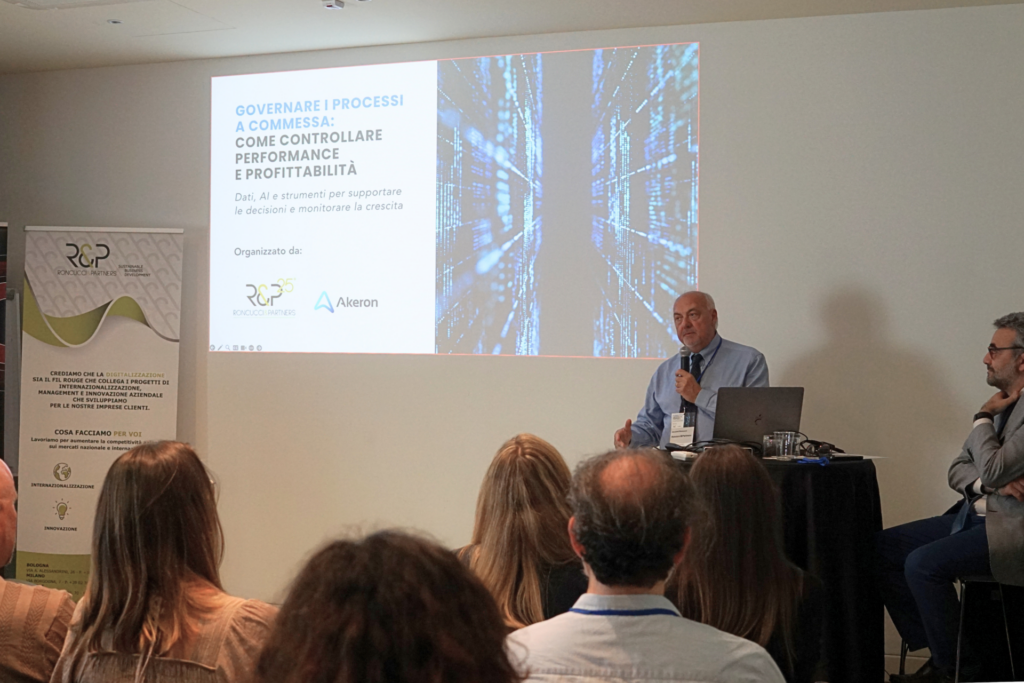
Giovanni Roncucci, President of Roncucci&Partners, opens the discussion.
Among the themes that emerged most strongly, one in particular deserves further attention: technology only works when it follows serious work on business processes.
For companies that operate on a project basis, in fact, digitization means first building a measurable operational model.
The digitization of project-based processes is much more than simply adopting a digital solution. It involves strategy, organization, people, processes, project management, and change management.
People, processes, technology, and governance must be viewed as a single system: only then can digital tools truly become useful for monitoring performance and profitability.
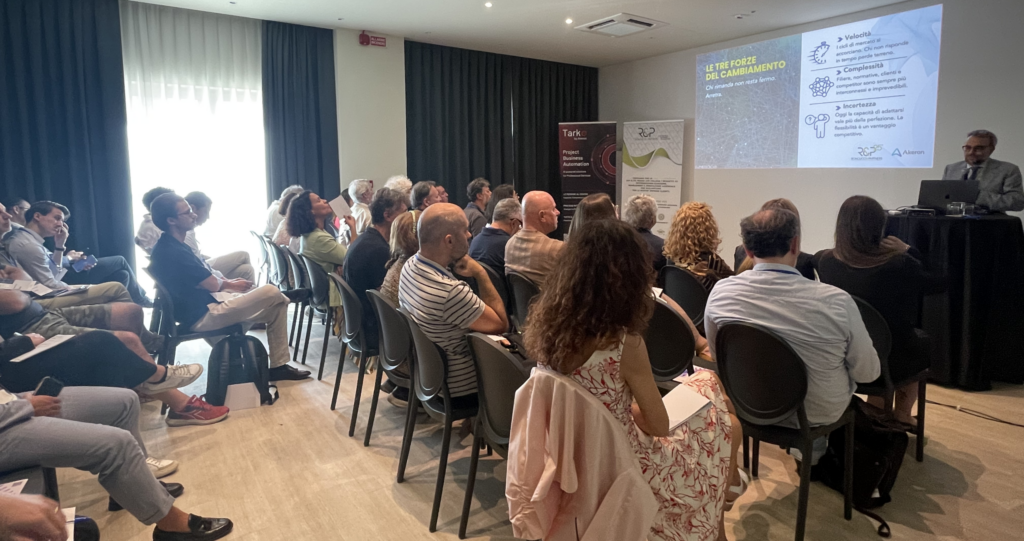
Gabriele Anzalone, a board member at Roncucci&Partners, outlines the three drivers of change for business growth through digital transformation.
These are the points that were discussed during the meeting and that guide Roncucci&Partners’ work in organizational and digital transformation initiatives.
In this regard, the case study of SI.ME.TE.—a company specializing in civil, structural, and infrastructure engineering, as well as architecture—was particularly interesting.
Marco Caretto, Designer and Senior Architecture Project Manager, presented SI.ME.TE.’s perspective and described the company’s journey.
The SI.ME.TE. Case: From Individual Knowledge to a Shared Model
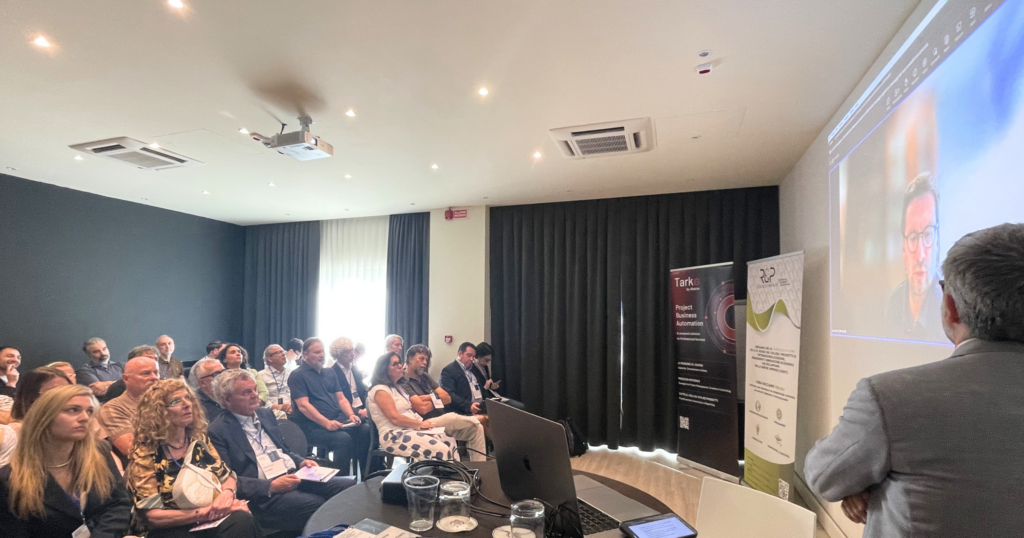
Marco Caretto, Architect, Designer, and Senior Project Manager at SI.ME.TE., explains the process of change within his company.
SI.ME.TE. is a useful case study because it clearly illustrates a transition that many companies working on a project basis can relate to: the shift from a management approach reliant on people’s experience and established practices to a more structured model.
This is a model that SI.ME.TE. adopted even before considering technological evolution. The starting point was: “How can we make the organization work better?”
From there, several key questions emerged:
- Who is responsible for making decisions, and based on what information?
- What steps does a project go through, from the initial estimate to final accounting?
- Where do bottlenecks occur?
- What data is truly needed to monitor progress, costs, timelines, and profit margins?
- What are the needs of the various teams involved?
Process First → Software Second
This analysis served as the starting point for the methodological work: mapping existing processes and designing the future model. Who does what, with what information, within what timeframes, and with what responsibilities.
This work precedes any technological decision, because it allows technology to fit into a context that is already clearly defined. Technology must implement an organizational plan that has already been designed.
In the case of SI.ME.TE., digitization was therefore treated as the result of an organizational analysis process.
The Role of People in the Digitization of Processes
A central element of this process was the working groups.
Involving people, gathering their actual needs, and identifying critical issues and priorities from the ground up helped ensure that digitization was not perceived as a decision imposed from above.
The people who will use these tools every day are also the ones who best know where the process breaks down. If this is ignored, there is a risk of building a system that is operationally disconnected from the way the company actually works.
 From Organizational Design to Digital Solutions
 From Organizational Design to Digital Solutions
This is where the second theme that emerged during the event comes into play—the one related to Akeron and the Tarko platform. The joint effort between Roncucci&Partners and Akeron made it possible to implement a solution tailored to a business plan of strategic importance.
The platform was specifically designed for companies that work on a project-by-project basis: engineering and architecture firms first and foremost, but also companies active in facility management, IT firms, and organizations that manage complex projects.
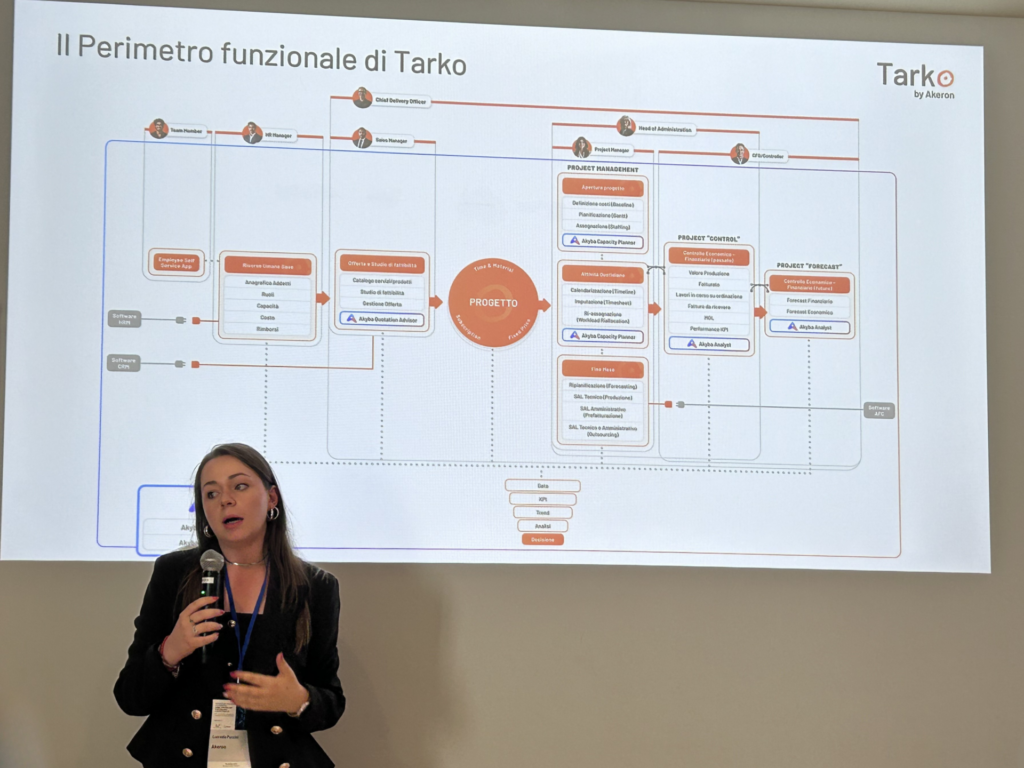
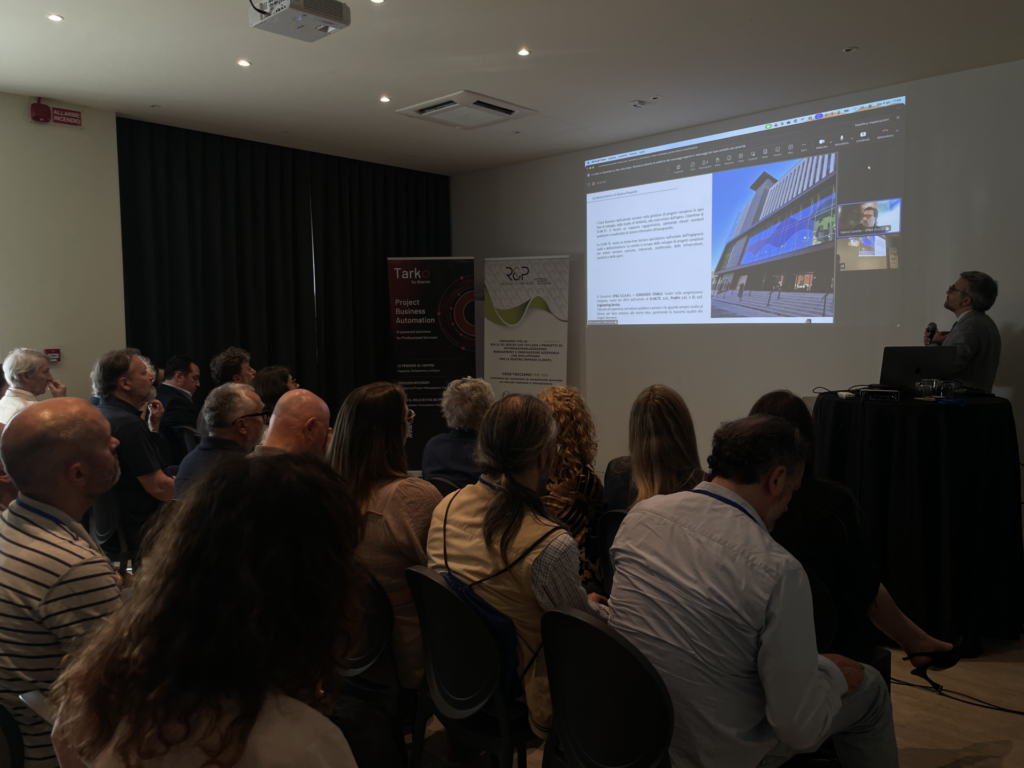
Lucrezia Puccini, a Pre-Sales Consultant at Tarko by Akeron, demonstrates the tool through a demo.
Tarko provides useful tools for introducing and consolidating project management methodologies within a company, linking the organizational structure to the operational management of projects.
A Model That Can Be Replicated
The common thread linking the SI.ME.TE. case study and Akeron’s integration is the same one that ran through the entire event in Bologna: digital transformation begins with understanding how the company truly works—or how it wants to work.
It’s a model that requires more time in the initial phase, because it forces us to pause and plan before building.
It also significantly reduces one of the most common risks in digitalization projects: ending up with an underutilized tool that feels out of place—one that generates data but doesn’t actually provide control.
Without alignment and a clear purpose, technological upgrades cannot produce lasting results.
The question that concluded the article previewing the event remains valid even now that the process is underway: are we governing our project-based processes, or are we merely chasing after them?
Do you want to understand whether your project-based processes are truly governed or merely managed on a day-to-day basis? Contact us to build a digital transformation path starting with your organizational model.
Related Articles: